D
H
M
S
Lock in this year's prices on all our tours.

Lock in this year's prices on all our tours.
Use the promo code GO26 at checkout
Reserve your seat and stay flexible

Here is a fact that still feels slightly implausible when you say it out loud. A small, frequently damp island off the northwest coast of Europe, a place with a population smaller than California, has produced the Beatles, the Rolling Stones, David Bowie, Led Zeppelin, Pink Floyd, Elton John, Queen, Eric Clapton, Dire Straits, The Clash, Radiohead, Adele, and Amy Winehouse. To name a few.
Britain's musical output, measured against its size, is a cultural overperformance that has no real equivalent anywhere else. And the best part? The landscape that produced it, the chalk cliffs, the rolling hills, the wild Scottish glens, the Cornish coastline, is still right there. Completely visitable. Waiting for you.
One of the things our guests notice, and something that regularly shows up in our reviews, is that our guides genuinely love this stuff. On any given journey across the British countryside, the right piece of music playing at the right moment (as you crest a hill into the Cotswolds, or catch your first sight of the White Cliffs) has a way of making the hairs on the back of your neck stand up. We've put some of our favourites in this article. Listen to them before you come. And again when you arrive.
Before the bands, before the studios, before the charts, there was the land. British music has always been a conversation with its landscape in a way that few other musical traditions can match.
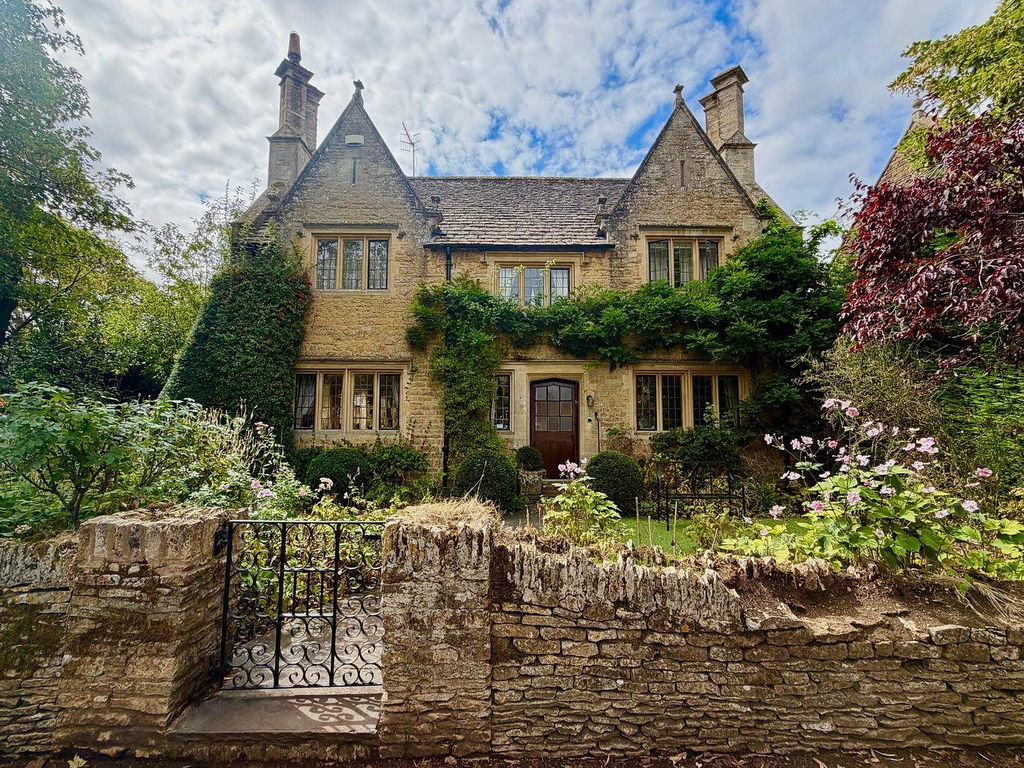
In 1914, composer Ralph Vaughan Williams sat down and wrote The Lark Ascending, a piece for violin and orchestra inspired by a poem about a skylark rising over the English countryside. This wasn't simply a composer romanticising a landscape from afar. Vaughan Williams was born in Down Ampney, a small village in Gloucestershire, right in the heart of the Cotswolds. He grew up surrounded by these fields, these skies, these villages. He then spent years travelling across rural England collecting traditional folk songs from the communities that had sung them for generations, music that had grown directly from the soil, the seasons, and the rhythm of ordinary working life. What he eventually produced is widely considered the most beloved piece of classical music ever written by a British composer. It sounds, to an almost uncanny degree, exactly like the Cotswolds look.
🎵 Listen: The Lark Ascending — Vaughan Williams
Play this as you come over the brow of a hill and see the Cotswolds valleys open up below you, the golden stone villages, the meadows, the church spires, and try to tell us it doesn't sound like it was written for exactly this moment. Because in a very real sense, it was. It's the piece our guides return to again and again on the Cotswolds tour from London and the Cotswolds tour from Bath, and there's a reason for that. Vaughan Williams didn't imagine this landscape. He came from it.
He wasn't alone in hearing Britain's countryside as music. Edward Elgar, who grew up in the Malvern Hills on the edge of the Cotswolds, wrote Enigma Variations and the Cello Concerto from a place of deep attachment to the English landscape. Benjamin Britten heard the Suffolk coast in everything he wrote. Delius heard the Yorkshire moors. The land got into the music and stayed there.
🎵 Listen: Nimrod — Edward Elgar
Some of Britain's most iconic music was made in places you drive straight past without knowing. On our Cotswolds tour from London, we pass the very spot where one of the most recognisable saxophone riffs in history was recorded. Gerry Rafferty's Baker Street, that opening melody, was laid down in a studio so close to our route that guests who know the story tend to go a little quiet when we point it out. Music has a way of changing how a place feels the moment you know the connection.
🎵 Listen: Baker Street — Gerry Rafferty
This is one of the things our guides bring to a journey that no map or guidebook can: the knowledge of what happened where, and the instinct to play the right song at exactly the right moment. It turns a road into a story.
In 1942, with Britain deep in the Second World War and the outcome genuinely uncertain, a young Welsh singer named Vera Lynn recorded a song called The White Cliffs of Dover. It promised bluebirds over the cliffs, peace returning, loved ones coming home. On the surface, a fairly simple piece of wartime optimism.
What it became was something else entirely. For a generation of British people, and for soldiers stationed far from home across every theatre of the war, it was an anchor. The White Cliffs of Dover weren't just a geological feature. They were the image of home. Of safety. Of everything worth fighting for. The cliffs were the last thing you saw leaving Britain and the first thing you saw returning to it.
🎵 Listen: The White Cliffs of Dover — Vera Lynn
Standing on those cliffs today, which you can do on our Canterbury & Dover Cliffs tour, and looking out across the Channel towards France, the song takes on a weight that's hard to explain until you've actually been there. The history, the view, the music. All three arrive at once. It's one of those moments that visitors don't expect, and that stays with them long afterwards.
Vera Lynn, who lived to 103 and remained deeply beloved until her death in 2020, was voted the greatest Briton of the 20th century in a BBC poll. Not Churchill. Not Brunel. Not Lennon. Vera Lynn. That tells you everything about what music meant, and still means, to this country.
There is a reason Wales is called the Land of Song, and it has nothing to do with tourism marketing. It goes back centuries: to the bardic tradition, to the male voice choirs that emerged from the mining communities of the South Wales valleys in the 19th century, to the Eisteddfod, the national festival of Welsh music and poetry that has been running continuously since 1176. The oldest cultural festival in Europe.
The Welsh male voice choir is one of the most moving things you can encounter in Britain. Born in the chapel culture and the physical exhaustion of the mines, where men who worked in silence underground all day found their voices in song in the evenings, these choirs produced a sound of real power and emotion. When Wales plays rugby at the Principality Stadium in Cardiff and 75,000 people spontaneously break into four-part harmony, it's this tradition you're hearing. Nothing else on earth sounds quite like it.
🎵 Listen: Calon Lân — Welsh Male Voice Choir
On our Best of Wales tour, you travel through the landscapes that gave birth to all of this: the valleys, the castles, the coastline, the mountains of Eryri (Snowdonia). Wales has its own language, its own music, its own culture, and a fierce pride in all three. It is not a region of England. It is its own country, with its own soul. Its music will tell you so in no uncertain terms.
Scottish traditional music, the wail of the Great Highland Bagpipe, the snap of the fiddle, the drone of the clarsach, sounds like its landscape in a way that borders on the supernatural. Hear the pipes across an open Highland glen and try to imagine them anywhere else. You can't. They grew from this land. They belong to it.
The bagpipes are ancient. Versions of them existed across the ancient world. But Scotland made them its own, and their use in Highland culture became so powerful that after the Jacobite Rising of 1745, the British government briefly banned them as an instrument of war. An instrument of war. That's how seriously they were taken.
Robert Burns, Scotland's national poet, wrote in the 18th century with such musicality that his words became songs almost automatically. Auld Lang Syne, which the entire world sings at midnight on New Year's Eve, is a Burns poem set to a traditional melody. The whole world, every year, sings a Scottish song. Most of them have no idea.
Our Loch Ness & Glenfinnan Viaduct tour from Edinburgh and our Loch Lomond & Highlands tour take you deep into the landscapes that produced this music. The Glenfinnan Monument, the Highland glens, the lochs stretching away into the mist. It all sounds like something. Trust us and put the pipes on.
Here's one of history's great ironies. American rock and roll (Chuck Berry, Little Richard, Muddy Waters, Buddy Holly) crossed the Atlantic in the late 1950s and landed in port cities like Liverpool and London, where young British musicians absorbed it obsessively and then sent it back across the ocean transformed.
The Beatles, arriving in America in February 1964 on The Ed Sullivan Show, were watched by 73 million people, a third of the entire US population. The hysteria was unlike anything American television had seen. What nobody mentioned was that John, Paul, George and Ringo were playing music they'd learned from American records in the back rooms of Liverpool pubs and clubs. They'd taken American music, added British wit and British melancholy and British pop sensibility, and produced something the Americans had never heard before. Even though they'd given the British the raw materials.
🎵 Listen: In My Life — The Beatles
The Rolling Stones did the same thing with the blues. Led Zeppelin did it with American folk and delta blues. The whole British Invasion was, in essence, Britain returning America's own music to it with the volume turned up and the edges made sharper. It remains one of the great cultural exchanges in history.
Britain has a genius for musical reinvention that goes beyond any other country. Just when its music seems to have settled into something comfortable, someone comes along and blows the whole thing up.
David Bowie, born David Jones in Brixton, south London, reinvented himself so many times and so completely that each version seemed like a different person. Ziggy Stardust. Aladdin Sane. The Thin White Duke. He used music as pure theatre, as art, as provocation, changing not just what British music sounded like but what it was allowed to be. Without Bowie, there is no punk, no new wave, no goth, no Britpop. He broke the template everyone else then worked from.
🎵 Listen: Life on Mars? — David Bowie
Then came punk. 1976. The Sex Pistols, The Clash, the Buzzcocks. A collective howl of rage from young working-class Britain at unemployment, inequality, and a music industry that had become bloated and disconnected. It lasted about three years as a movement and changed music permanently. The DIY ethic of punk (anyone can do this, you don't need to be trained or approved or polished) rippled through every genre that followed. Indie, alternative, grime: all of them owe punk a debt.
In the mid-1990s, something strange and specific happened. A group of British bands (Oasis, Blur, Pulp, Elastica, Suede) started making music that sounded aggressively, almost defiantly, British. Working-class estates and middle-class anxieties. Council houses and art schools. The mundane glories of ordinary British life rendered in three-minute guitar pop.
Oasis wrote anthems for people who'd never expected to have anthems written for them. Blur documented suburban Britain with a kind of fond, sharp-eyed irony. Pulp's Jarvis Cocker wrote about class, longing, and aspiration with a literary precision that most novelists would envy.
🎵 Listen: Wonderwall — Oasis
What's remarkable about Britpop in retrospect is how specifically located it was. How much it sounded like Britain in the 1990s, in the same way that the Lark Ascending sounds like the Cotswolds. Music as place. Music as time. Music as a document of a particular country at a particular moment.
While pop music went through its cycles of reinvention, British folk tradition never actually died. It just waited. The folk revival of the 1960s, led by figures like Fairport Convention and Sandy Denny, brought traditional British and Irish folk into conversation with rock music and produced something remarkable. And in 2020, during lockdown, a Scottish postman named Nathan Evans posted a video of himself singing Wellerman, a 19th-century sea shanty, on TikTok. Within weeks it had been heard by hundreds of millions of people and sparked a global sea shanty revival that nobody saw coming.
🎵 Listen: Wellerman — Nathan Evans
The fact that a 200-year-old sailor's work song could go viral in 2020 says something important about British music: its roots go deep, and they don't disappear. They just wait for the right moment to resurface. Cornwall, which features on our Cornwall & Cotswolds tour, has one of the richest maritime folk traditions in Britain. The fishing villages, the harbour pubs, the coastline: all of it feels like a sea shanty waiting to happen.
And then, in the summer of 1988, something entirely unexpected happened. It became known as the Second Summer of Love. It changed British culture as profoundly as punk had, just far more quietly, and considerably further from London.
Acid house music had arrived from Chicago, filtered through the clubs of Ibiza and landed in the hands of DJs in Manchester and London who understood immediately what they had. What followed was a movement unlike anything Britain had seen: thousands of young people converging on disused warehouses, aircraft hangars, and fields across the country to dance together until dawn to music built entirely from machines. No guitars. No singers. No band. Just a DJ, a sound system, and a crowd moving as one.
In 1988, a young musician from Manchester named A Guy Called Gerald made Voodoo Ray in a single night on a borrowed sampler for around £200. It became one of the defining records of the British acid house movement, a hypnotic, alien piece of music that sounded like nothing that had existed before it. Created on almost no budget by someone who had simply absorbed what was happening around him and pushed it somewhere new. That story (brilliant, cheap, unstoppable) is the story of British rave culture in miniature.
🎵 Listen: Voodoo Ray — A Guy Called Gerald
The orbital raves of the late 1980s, where fleets of cars would follow directions broadcast on pirate radio to secret locations around the M25, were one of the most remarkable social phenomena in modern British history. Working-class kids from Essex and middle-class students from London, people of different races, backgrounds and postcodes, all finding themselves together in the same field at 3am with the same feeling of euphoric collective belonging. The establishment was predictably horrified. The Criminal Justice Act of 1994 attempted to shut it all down, specifically defining and criminalising music characterised by "a succession of repetitive beats." The government wrote rave music into law in order to ban it. It didn't work.
What rave culture left behind was enormous. It created the template for the modern festival. Glastonbury transformed from a hippie folk gathering into something far larger and more diverse partly because of what the rave generation brought to it. Rave gave birth to drum and bass, jungle, UK garage, grime and dubstep, each of them a distinctly British mutation of the original electronic impulse, each subsequently exported to the rest of the world. And then there was The Prodigy, a band that grew directly out of the Essex rave scene, took the chaos and energy of those fields and warehouses and amplified it into something that filled stadiums worldwide. The kid from Braintree who went to illegal raves and ended up headlining Glastonbury. Britain, in a nutshell.
🎵 Listen: Out of Space — The Prodigy
The Haçienda in Manchester, the club that stood at the centre of the Madchester scene blending rave with indie guitar music, became one of the most mythologised venues in music history. It lost money almost constantly and remained one of the most important cultural institutions in Britain regardless. Some things are worth more than profit. The Haçienda understood that, even when its accountants didn't.
One of the things guests mention most in their reviews, alongside the history and the landscapes, is the music our guides play on the road. The right song, in the right place, at the right moment, can turn a good day into one you keep thinking about weeks later. Here are the tracks that come up most often on our tours:
🎵 The Lark Ascending — Vaughan Williams (Born in the Cotswolds)
🎵 Baker Street — Gerry Rafferty (On our Cotswolds tour from London, we drive past where this was recorded)
🎵 The White Cliffs of Dover — Vera Lynn (For the moment you first see them from the clifftop)
🎵 Calon Lân — Welsh Male Voice Choir (For Wales. Put this on as you cross the border)
🎵 Scotland the Brave — Massed Pipes and Drums (For the Highlands. Volume up)
🎵 Nimrod from Enigma Variations — Elgar (For Stonehenge at dusk. Nothing else comes close)
🎵 Voodoo Ray — A Guy Called Gerald (It probably won't be played on your tour, but one of your guides likes to listen to it on the motorway at night)
🎵 Life on Mars? — David Bowie (For London. Always)
🎵 Wonderwall — Oasis (For anywhere, really. It's basically inescapable)
🎵 Wellerman — Nathan Evans (For Cornwall. Harbour optional but recommended)
🎵 In My Life — The Beatles (For the end of a long, brilliant day on the road)
Britain's music is something you experience in the places that made it. The chalk cliffs, the Highland glens, the Cotswold valleys, the Welsh mountains, the post-industrial cities that reinvented themselves in sound. Every landscape has its song. Every song has its landscape.
Browse all our UK tours and start planning. We'll take care of the journey. And the music.


Sign up for travel features, offers and competitions.
Go Tours Ltd, Michelin House, 81 Fulham Road, London, SW3 6RD
Company Number: 10465406
Nigel our driver/guide was amazing, entertaining and informative. The locations were perfect and I had a brilliant day
A brilliant day in the Cotswolds is exactly what we like to hear. Nigel has a real passion for the places we visit, so it’s lovely to know his stories and personality added to your day. Best, Maya
We loved our tour. Our driver/tour guide Rob was great. His driving skills on the skinny roads was amazing!!! All the stops were great, our B&BS were very nice. Id highly recommend this tour!!!
I'm glad you had a brilliant five days with Rob. He certainly knows his way around those skinny country roads, so it’s lovely to hear you felt in good hands and enjoyed the stops and B&Bs along the way. Best, Maya
Our guide, Chris S, did an outstanding job from the moment we arrived until he had us safely back to our drop off point. He was professional, friendly, very helpful, and an amazing driver. He even gave us the proper coins for the restroom facilities in one of the villages that did not accept cards.
The tour was perfect! We were on a small, 16 passenger van, not on a mega bus, which made traveling so much more personal and easier to accomplish. We were able to explore four of the most charming villages in the Costwolds while learning about their history. I highly recommend this tour with this company.
Chris coming to the rescue and giving you some of his coins for the toilet was a nice gesture. It’s lovely to hear you enjoyed the more personal feel of travelling in a small group and had such a great day exploring the four villages. Thanks for the recommendation. Best, Maya
Great trip, learned a lot. The only disappointment was the St Ives stop. They dropped us off by a beach. Could not find the shops to look around in. Maybe find a better drop off so that more people can enjoy the culture. Rob was a great driver.
I'm glad you enjoyed the trip and felt in good hands with Rob. Our drop-off point in St Ives is chosen based on where our minibuses can safely and practically access it, as some of the roads are pedestrian-only. We appreciate your feedback and understand you would have liked to be closer to the centre. Best, Maya
A really great day out in Cotswolds with Dave our driver. We visited four lovely villages and while entering the villages and on the Road Dave gave very interesting historical facts. He had a good planning which gave us enough time to explore these beautiful locations. All in all we really recommend this trip!
It sounds like Dave got the balance just right between sharing the history and giving you plenty of time to explore on your own. Thanks for the recommendation, and I'm glad you had such a great day in the Cotswolds. Best, Maya