D
H
M
S
Use the promo code GO26 at checkout
GO26


No country on earth packs quite so much history into such a small space. Britain is an island that has been invaded, reinvented, divided, united, and exported to the world more times than seems entirely reasonable — and almost everywhere you go, the evidence is right there in front of you, hiding in plain sight.
Consider this: over 1.5 billion people across the world speak English today. The language of a small, rain-soaked island off the northwest coast of Europe became the global language of science, commerce, diplomacy, and the internet. That didn't happen by accident. It happened because of everything that follows.
Here's the thing about British history: it didn't just happen. It left things behind. Roads, ruins, castles, cathedrals, field boundaries, pub names, place names, accents, laws. The country you travel through today is, in the most literal sense, built from everything that came before it. Knowing the story makes everything you see more interesting.
So here, roughly, is that story.
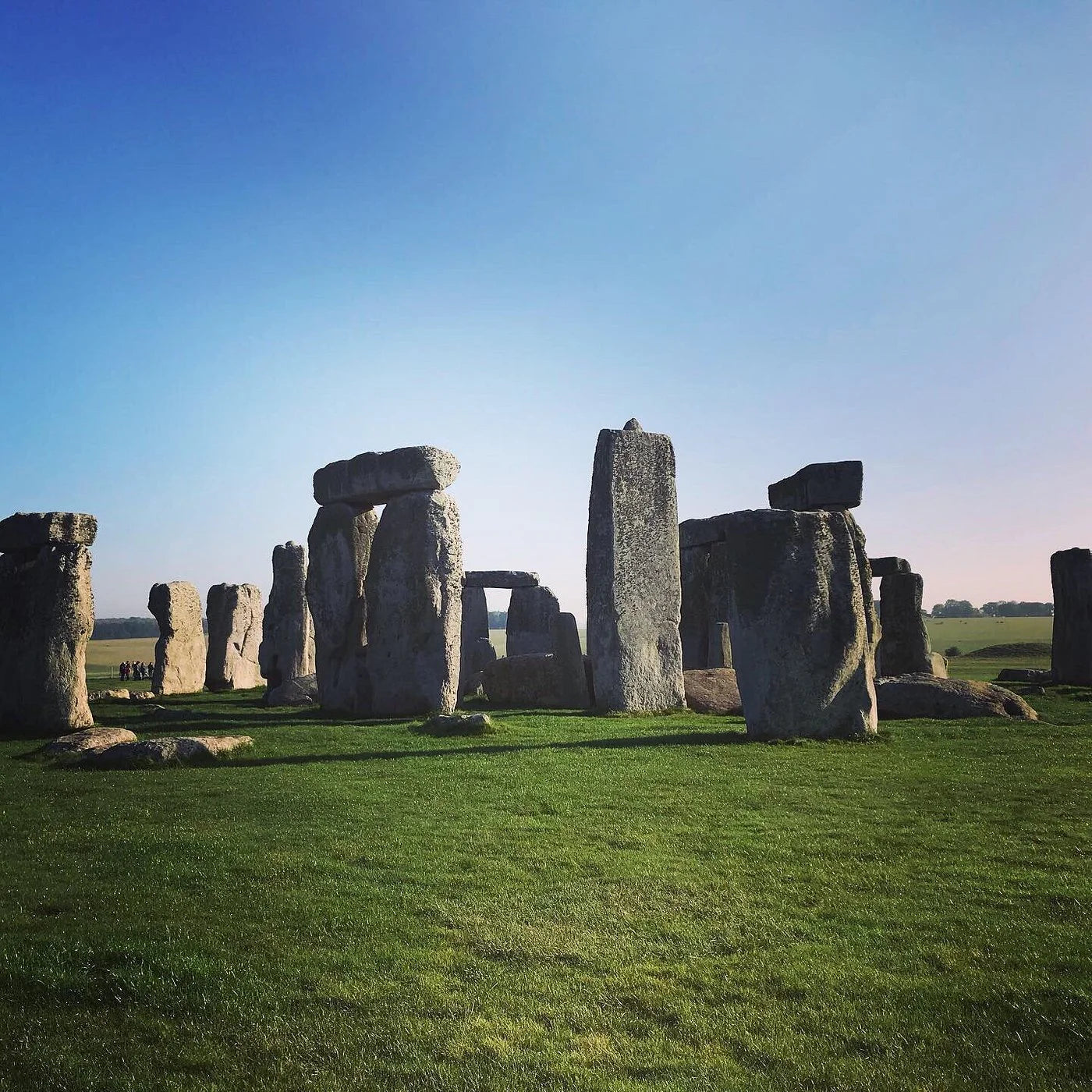
Around 3000 BC, somebody decided to drag enormous stones from Wales to Salisbury Plain and arrange them with precise solar alignment. We still don't know exactly why. Stonehenge is the most famous of over a thousand prehistoric stone circles scattered across Britain — each one a question mark left in stone by people who had no writing, no metal tools, and apparently an extraordinarily sophisticated understanding of the sky.
Standing at Stonehenge — which you can do on our Cotswolds, Bath & Stonehenge tour from London and our Cotswolds and Stonehenge tour from Bath — is one of those rare moments where the ancient world feels genuinely close. These people were not primitive. They were just different from us. And they built things that have outlasted almost everything that came after them.
In 43 AD, the Roman Emperor Claudius invaded Britain and changed it forever. The Romans gave Britain roads, underfloor heating, indoor plumbing, and cities — including a small riverside trading settlement they called Londinium. You may have heard of it.
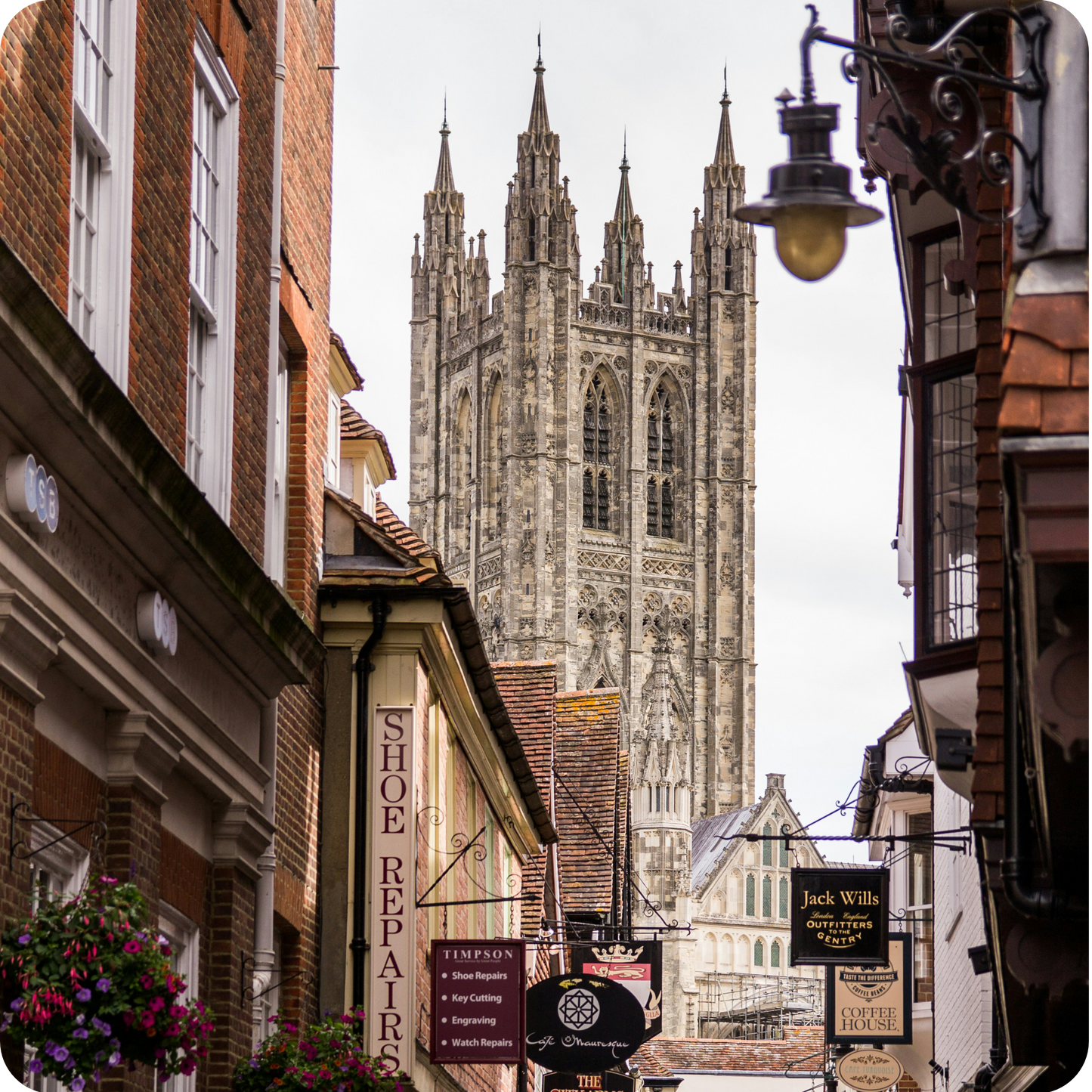
For nearly 400 years, Britain was part of the greatest empire the western world had ever seen. The Romans built Bath — Aquae Sulis — around the natural hot springs that still bubble up today, and the city they created is one of the most beautifully preserved in Britain. When you walk Bath's streets with us, you're walking the bones of a Roman city. Canterbury, which features on our Canterbury & Dover Cliffs tour, was another major Roman settlement — one of the first places the Romans fortified after landing on British soil.
When Rome finally withdrew in 410 AD, it left behind roads that Britain would use for centuries, a language riddled with Latin, and the infrastructure of modern civilisation.
After Rome left, things got complicated. Germanic tribes — Angles, Saxons, Jutes — moved in and carved Britain into competing kingdoms. Then the Vikings arrived, raiding coastlines from the 790s onwards before eventually settling large parts of northern and eastern England. The boundary between Anglo-Saxon and Viking England — the Danelaw — ran roughly through the Midlands, and its legacy is still visible in place names ending in -by, -thorpe, and -wick across the north.
York, which sits at the heart of our York & Lake District tour, was the Vikings' most important city in Britain. They called it Jórvík, and it became one of the most significant trading cities in northern Europe. Beneath the modern streets, the Viking city is still there — and the Jorvik Viking Centre lets you descend directly into it.
It was out of this messy, contested period that something called England slowly emerged — forged by conflict, compromise, and the determined vision of leaders like Alfred the Great, who united the Anglo-Saxon kingdoms and gave Britain its first national identity.
If you had to pick a single year that shaped Britain most profoundly, most historians would say 1066. When William the Conqueror defeated King Harold at the Battle of Hastings and marched on London, he didn't just change the monarch — he changed the language, the architecture, the legal system, and the social order in a single generation.
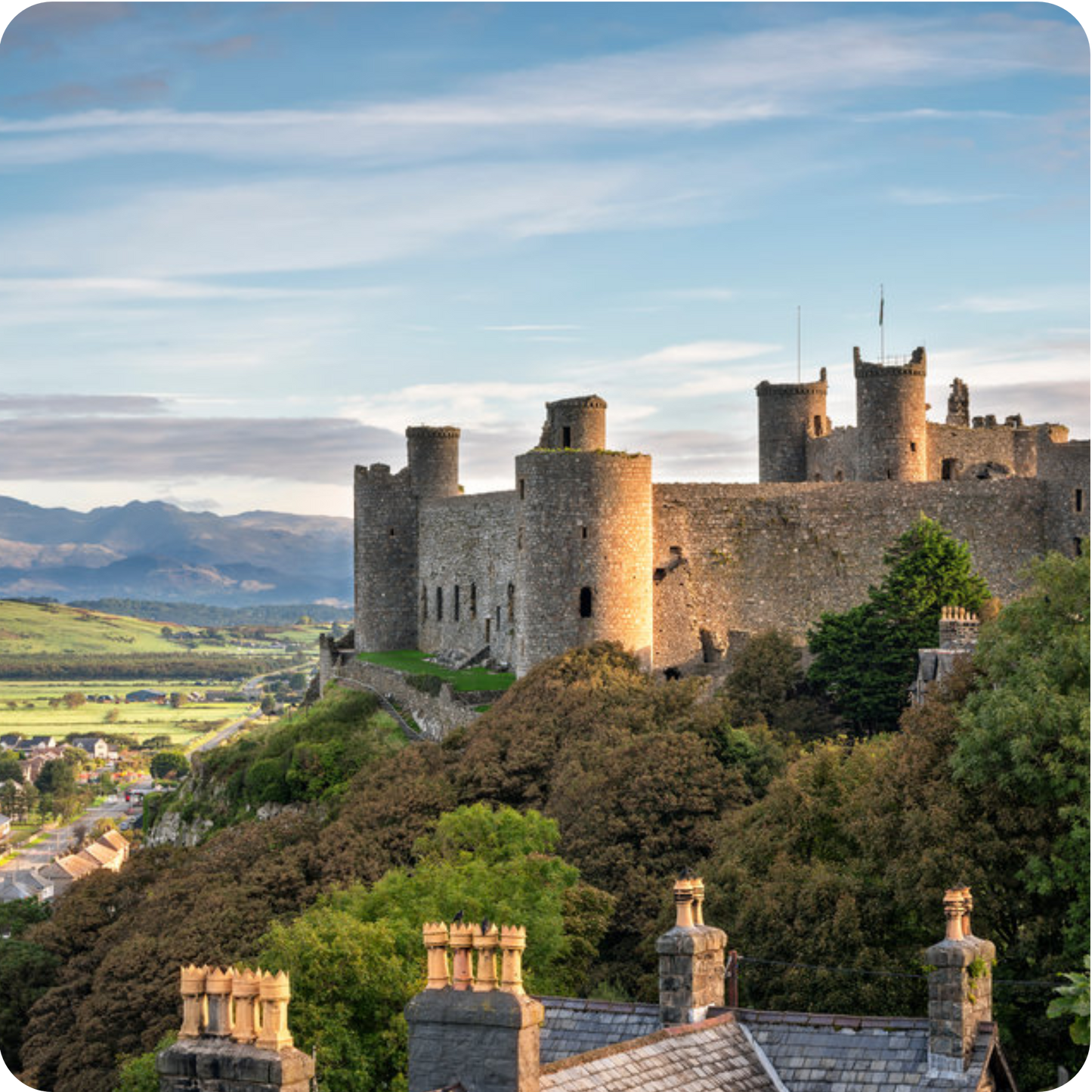
The Normans introduced French as the language of power, which is why English today is such a strange hybrid: we cook a pig (Anglo-Saxon) but eat pork (French). We work the land (Anglo-Saxon) but own property (French). The class system embedded in that language gap never entirely disappeared. And the castles the Normans built across Britain — to control a population that deeply resented them — still dominate skylines from Cornwall to Wales to Yorkshire.
Wales, which features across our Best of Wales tour, was never fully conquered by the Normans, and its fierce resistance to English rule shaped a national identity that remains distinct and fiercely proud to this day.
In 1215, something happened in a field beside the Thames at Runnymede that would quietly reshape the entire future of human civilisation. King John — broke, militarily disastrous, and deeply unpopular — was forced by his own barons to sign Magna Carta: a charter limiting the power of the king and establishing that even the most powerful person in the land was subject to the law.
At the time it was a political compromise, quickly ignored by both sides. But the principles it established — that no one is above the law, that citizens have rights the state cannot simply override, that arbitrary imprisonment is unlawful — became the philosophical foundation of every democracy that followed. The United States Constitution, the Universal Declaration of Human Rights, modern legal systems across the globe: all of them trace a line back to that muddy field in Surrey.
You can visit Runnymede today. It's a quiet, understated place — which somehow feels exactly right for a document that changed everything without anyone fully realising it at the time.
The Tudor period (1485–1603) gave Britain Henry VIII, Anne Boleyn, the Church of England, Shakespeare, and Elizabeth I — in other words, most of the things the world associates with Britain when it thinks of Britain. Henry's decision to break with Rome and establish himself as head of a new church wasn't just personal (though it was definitely personal). It was a seismic geopolitical act that made Britain Protestant, set it on a collision course with Catholic Europe, and eventually drove the settlement of America.
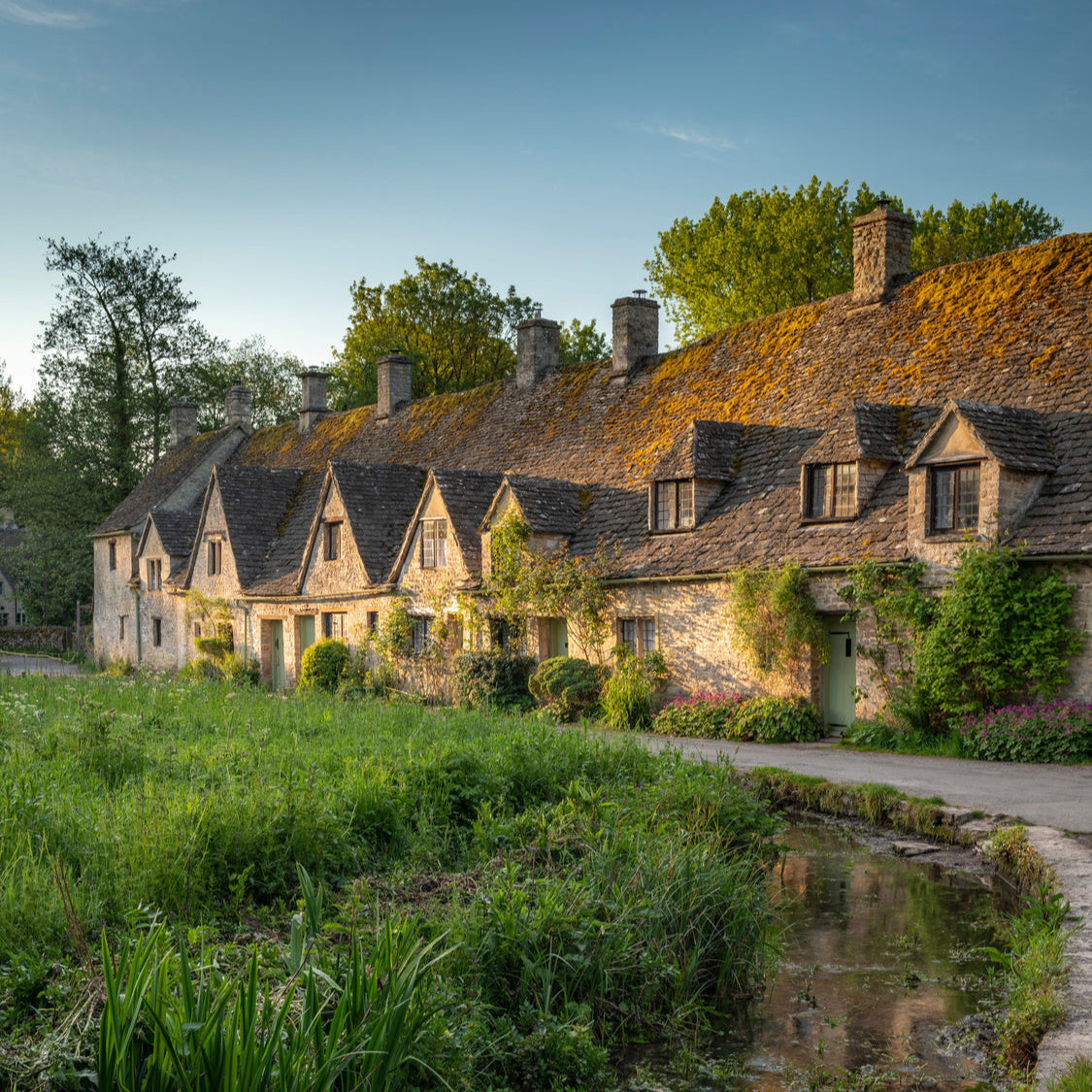
Elizabeth I then took that newly independent, newly confident nation and turned it into a global power, defeating the Spanish Armada in 1588 and setting Britain on course for an era of exploration and empire that would reshape the world. The Cotswolds — which you'll explore on several of our tours — quietly funded much of this early ambition: the medieval wool trade that built those impossibly pretty villages made England one of the wealthiest nations in Europe long before the first ships set sail.
The 17th century brought civil war, the execution of a king, and eventually — almost accidentally — the invention of constitutional democracy. When Parliament finally reasserted control after decades of royal overreach, it codified its victory in the Bill of Rights of 1689: a landmark document establishing freedom of speech in Parliament, the right to petition the monarch, and the principle that no army could be raised without Parliament's consent.
Together with Magna Carta, the Bill of Rights forms the bedrock of the British constitution — and its fingerprints are all over the American Bill of Rights, drafted almost exactly a century later. The idea that government exists to serve the people, not the other way around, was road-tested in Britain before it went global. The Glorious Revolution of 1688 that produced it established something that has held ever since: that no British monarch can govern without Parliament. That principle, refined and exported over the following centuries, underpins democratic systems around the world today.
At its height in the early 20th century, the British Empire was the largest in human history — covering roughly a quarter of the world's land surface and governing around 400 million people across six continents. From India to Australia, Canada to the Caribbean, West Africa to Hong Kong, the reach of a small island nation was, by any measure, extraordinary.
How it happened is a story of trade, ambition, naval power, and — it must be said honestly — conquest, exploitation, and the forced movement of millions of people. The transatlantic slave trade, in which Britain played a central and deeply shameful role for nearly two centuries, remains one of history's gravest moral failures. Understanding the empire means holding both things at once: the genuine cultural exchange, the infrastructure, the spread of law and language on one hand — and the violence, the extraction, and the human cost on the other. Modern Britain is still reckoning with that inheritance, and rightly so.
What is undeniable is the empire's reach. The reason cricket is played in Mumbai and the Caribbean, why so much of the world drives on the left, why English common law underpins legal systems from Singapore to Jamaica, why English became the world's lingua franca — all of it flows from this period. The Britain you visit today is a post-imperial country still shaped, in ways both visible and invisible, by what it once was. London in particular — one of the most diverse, culturally layered cities on earth — is the living result of centuries of global entanglement. Walk through its neighbourhoods and you're walking through the history of the world.
Alongside empire, Britain was inventing things at a rate that seems almost implausible in retrospect. The steam engine. The railway. The telephone. The television. The World Wide Web. Penicillin. The smallpox vaccine. The jet engine. The theory of evolution. The computer. Radar. The electric motor. Stainless steel. The flush toilet.
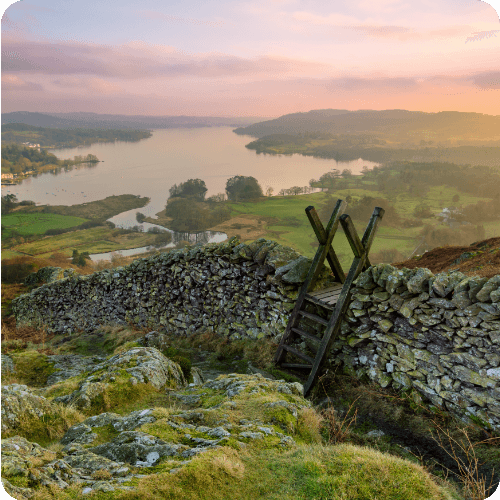
These weren't coincidences. The Industrial Revolution, which began in Britain in the 1760s, created a culture of applied curiosity — practical people solving real problems at enormous scale — that produced innovation after innovation for two centuries. Much of it was concentrated in the north of England, in cities and regions we explore on our York & Lake District tour. The Lake District itself became the spiritual antidote to all of this industrialisation: Wordsworth, Coleridge and the Romantic poets retreated there in protest at what Britain was becoming, and in doing so invented the modern idea of nature as something worth protecting. Even the resistance to progress was, in its way, a British invention.
Modern Britain — with its extraordinary museums, its ancient pubs, its dry humour, its obsession with queuing and apologising — is the product of all of this. Every Roman road, Viking settlement, Norman castle, Tudor church, Enlightenment idea, imperial trading house, industrial mill and Georgian terrace tells part of the story. And the remarkable thing is that you can still visit almost all of it.
That's what makes travelling in Britain so endlessly rewarding. The history isn't behind glass. It's the landscape, the architecture, the cities, the countryside — it's the place itself. You don't need to go looking for it. You just need to arrive and pay attention.
We'll take care of the rest.
Browse all our UK tours and find the journey that's right for you — from the prehistoric stones of Wiltshire to the Viking streets of York, the Roman baths of Somerset to the wild mountains of Wales and Scotland. Britain has been 5,000 years in the making. It's ready when you are.