D
H
M
S
Lock in this year's prices on all our tours.

Lock in this year's prices on all our tours.
Use the promo code GO26 at checkout
Reserve your seat and stay flexible

Few places in Britain carry quite as much weight as the White Cliffs of Dover. Stand on the clifftop on a clear day and you can see France across the Channel, just 21 miles away. It's the kind of view that puts things in perspective. Here's everything you need to know before you visit.
The White Cliffs sit on the southeastern tip of England, in Kent, looking out across the English Channel towards the coast of France. They stretch for around 8 miles along the coastline and are easily reachable from London, which makes them a popular day trip, and one that's well worth making.
The cliffs are made almost entirely of chalk: the compressed remains of billions of tiny marine organisms that settled on the seabed over millions of years, then slowly rose above sea level as the land shifted.
Their bright white appearance isn't cosmetic. It's the result of constant natural erosion, which keeps stripping back the surface and exposing fresh chalk underneath. They're effectively repainting themselves, very slowly, all the time.
The cliffs mean different things to different people, but they've stood for something particular in British history: a landmark on the horizon for returning sailors and soldiers, a natural boundary between Britain and the continent, and a symbol of resilience during both World Wars when Dover was on the frontline.
Dover Castle, which sits high above the cliffs, played a pivotal role in that wartime history. The network of tunnels cut into the chalk below it served as a secret command centre during Operation Dynamo, the Dunkirk evacuation of 1940. You can still walk through them today.
Then there's Vera Lynn's famous wartime song, which embedded the cliffs into the national consciousness in a way that's hard to separate from the view itself. If you know the song, you'll think of it when you're up there. Most people do.
|
By train The high-speed train from London St Pancras to Dover Priory takes a little over an hour. Trains from London Victoria take around two hours. From the station it is a short bus or taxi ride to the clifftop. By car A straightforward drive down the M2 or M20, around two hours, depending on traffic. On a tour The most effortless way to do it. A guided tour from London takes care of the journey and adds context to what you're seeing along the way. Our Canterbury & Dover Cliffs tour combines the cliffs with a morning in Canterbury and a stop in the historic town of Deal: a proper day out in Kent. |
Visiting the cliffs is free. The National Trust manages much of the clifftop path, and there's a visitor centre with a small car park fee. The walk itself, along the clifftop with the Channel stretched out below you, costs nothing.
On foot, without question. The clifftop path offers wide views across the Channel in one direction and rolling Kent countryside in the other. On a clear day you can pick out the French coastline. A comfortable walk along the path and back takes around two hours, with plenty of spots to stop and take it in along the way.
The cliffs rise to around 350 feet (110 metres) at their highest point. From the National Trust visitor centre the path heads east along the top, with the Port of Dover and its ferries below you and the Channel beyond.
The usual turning point is South Foreland Lighthouse, a Victorian lighthouse cared for by the National Trust. In 1858 it became the first lighthouse to shine an electric light. It makes a natural place to stop before you walk back.
Look down as well as out. The chalk grassland on top of the cliffs is known for its wildflowers and butterflies in summer, and Exmoor ponies graze here to keep the scrub down.
Dover Castle stands on the hill just to the west. If you have a full day in Dover, the castle and its wartime tunnels pair well with a morning on the cliffs.
The clifftop is exposed, so bring a windproof layer, even in summer. Wear shoes with some grip. The path is uneven in places and can be muddy after rain.
Keep well back from the edge. Chalk crumbles, and the edge is not fenced.
Clear days are best if you want to see France. And check your phone: on the clifftop it may pick up a French network.
Yes, on a clear day. The French coast is 21 miles away across the Channel.
Allow around two hours for a comfortable walk along the clifftop path and back.
Around 350 feet (110 metres) at their highest point. They stretch for around 8 miles along the coast.
Yes. Our Canterbury & Dover Cliffs tour from London combines Canterbury, the coastal town of Deal and a walk on the clifftops in a single day.
Read next: Our guide to Brighton and the Seven Sisters, a timeline of British history and the British music scene.
|
Visit the White Cliffs with Go Tours UK Our Canterbury & Dover Cliffs tour from London is a full-day trip that takes in Canterbury Cathedral, the coastal town of Deal, and a walk along the clifftops above Dover. Small group, knowledgeable guide, just a good day in Kent. View itinerary and book |

Sign up for travel features, offers and competitions.
Go Tours Ltd, Michelin House, 81 Fulham Road, London, SW3 6RD
Company Number: 10465406
Everything about this tour was perfect. The small Mercedes van was great and so much better than the large busses with 75 people! The pick-up and drop-off was smooth and the tour was great. Canterbury Cathedral is amazing and a must-see in England. We stopped for lunch at a cute little town on the English Channel, and then went to the Cliffs of Dover for some stunning views. And one of the best parts of the trip was our driver/tour guide, Kevin. This is a full day on a small van, so the quality of the driver/guide is paramount! Kevin was amazing and made the day so enjoyable.
I’m glad the small-group format worked so well for you, from Canterbury Cathedral to the views at Dover. Kevin will be especially pleased to hear how much his driving, knowledge and company added to the day. We hope to welcome you back again someday. Best, Maya
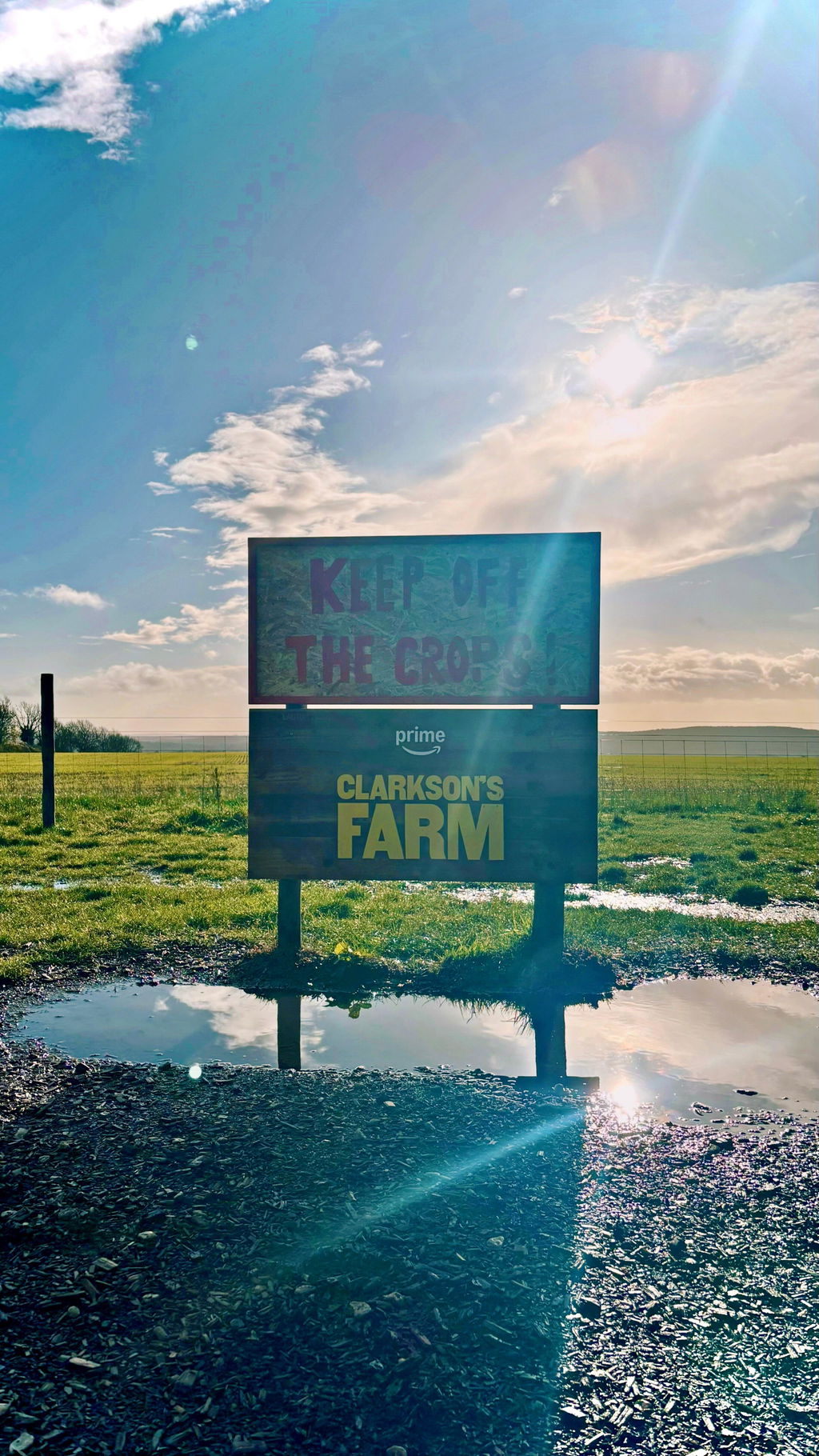
My husband and I went on the Clarkson’s Farms tour that took us to his farm shop, brewery and restaurant. Our driver Claire (not sure if spelled correctly) was fantastic! We loved all of her fun facts and information that she shared along the way. This tour was exactly what we were looking for! It hit all of the highlights and we had an amazing time!
I’m so glad the Clarkson’s Farm tour was exactly what you were hoping for. Claire will be delighted to hear that her fun facts and stories along the way were such a memorable part of the day. Thanks for joining us. Best, Maya
What a fun day out! We booked the Clarkson farm tour and had a great time! Our guide Claire was fantastic, very knowledgeable with great energy. The tour goes to all the essential locations with enough time to explore. 🙌
I’m so glad you had such a fun day on the Clarkson’s Farm tour. Claire will be really pleased to hear that her knowledge and energy stood out, and that the timing at each stop worked well for you. Best, Maya
Very kind , lovely music, time enough for the villages, patient, Sean was very nice and always had the right answers, definitely a great guide.
It’s lovely to hear the pace felt right and that Sean looked after everyone so patiently. I’m glad you enjoyed his knowledge, friendly approach and the music along the way. Best, Maya
This was my third tour through GetYourGuide. I do like the small group sizes; however, I recommend getting to the small buses early, otherwise you might get stuck with seats in the back that might leave you feeling a bit cramped next to strangers. I personally wish we had a little bit more time at each of the stops, but really appreciate the efficiency and the variety of stops they try to pepper in throughout your tour. Always appreciate learning new things! Will continue searching for tours this way in the future.
I’m glad you enjoyed the small-group format and the variety packed into the day. Seating is on a first-come, first-served basis, but all the seats in our minibuses are the same standard size. The tour is designed to give you a taste of several Cotswold villages rather than a deep dive into just one or two. But I understand the desire to spend more time in your favourite spots. Thanks for joining us. Best, Maya